
Using Machine Learning To Improve Pre-race Knowledge
4 Mar 2026
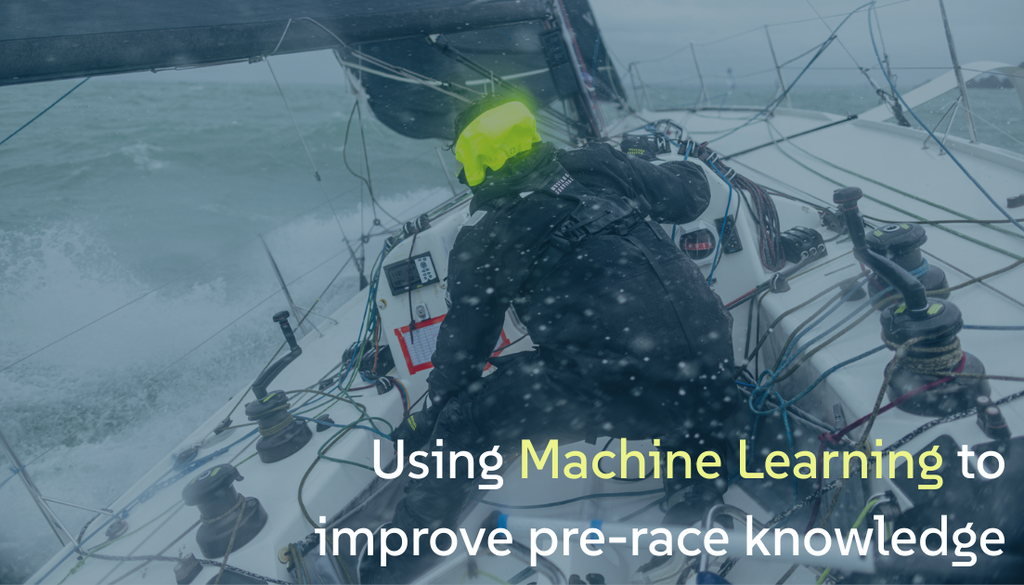
During single handed race training, new competitors (i.e. me) quickly learn that time on the dock is free, and time once you're at sea is very very expensive. Once you're out there you've got to trim your sails, steer the boat and look out for local weather changes that are subtly happening around you. Because of this, competitors prep their boats obsessively. Are my ropes and sails set up correctly for how I visualise the first section of my racing is going to be? Do I have all the weight stacked in the correct places? Are my autopilot settings correct for that first downwind? Before the morning briefing I have my boat fully prepped ready to go with sails, weight and snacks all in the right place ready to go.
This season the digiLab team is taking that same logic and applying it to data. The goal is simple — I want to know my capabilities in a Figaro 3 quicker than anyone else on the startline for the first time. My first race is in Concarneau on March 8th. The 50th edition of the Solo Guy Cotten opens the French Elite Championship, and using the same tools as everyone else on that pontoon isn't going to be enough.
The Problem with "Perfect" Polars
A polar is essentially a map of your boat's theoretical speed at every wind angle and every wind strength. The boat’s design office builds it, then it goes into your instruments, and you chase the numbers. The problem is that polars are built in ideal conditions by people who aren't going to be the ones sailing the boat at 3am, 200 miles offshore, on a lumpy Atlantic swell with reefed sails and a body running on two hours of sleep. A polar doesn't know you're tired. It doesn't know the sea state has built, or that you're slightly undercanvassed because the last gust spooked you. It just sits there telling you if you're slow or fast.
The gap between what the number says and what being fast actually entails in the real world is the difference where races are won and lost. And right now, for most competitors, closing that gap is just guesswork.
High Stakes: Why digiLab?
This is where digiLab comes in. They're a company whose work sits in environments where being wrong isn't really an option — advanced energy, air traffic control, infrastructure systems where a bad call has consequences that can't be undone. The mindset that comes out of that world is fundamentally different from traditional sailing software, where inaccuracies are expected and it historically relies on a sailor working with a theory of relative change. When digiLab looks at a problem, they're looking for a defensible answer, built on real data, and held to a standard most performance sailing tools have never had to meet.
That precision is exactly what I want to apply to my boat.
The Brain Trust: Ella Boxall & theLab
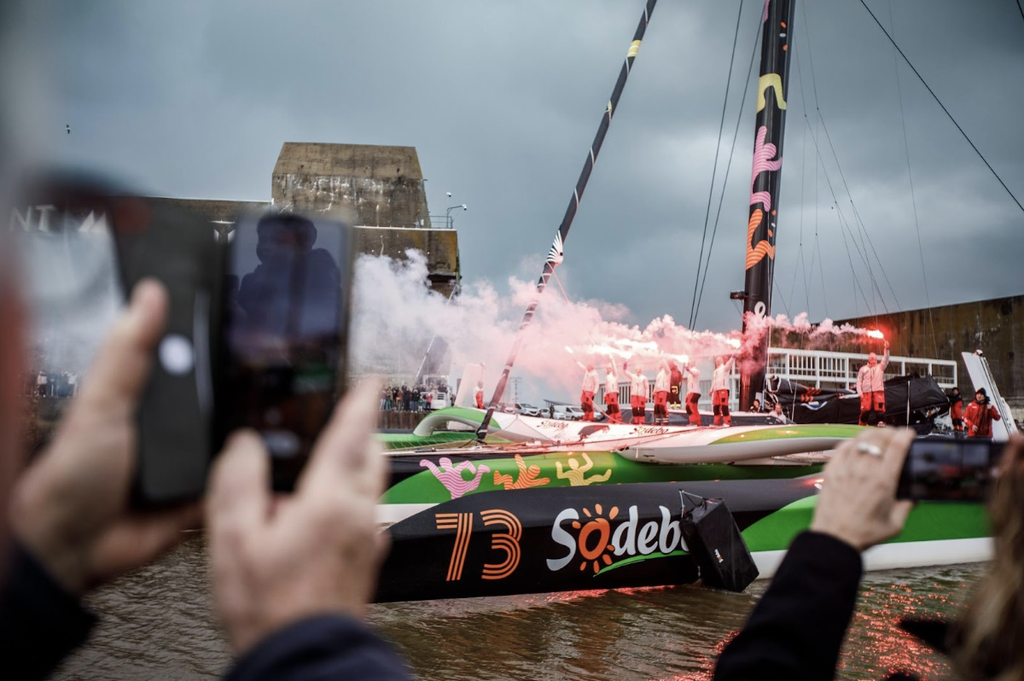
The meteorology side of this project is being led by Ella Boxall, whose background includes working with the Sodebo Ultim campaign and the Jules Verne Trophy — the round the world speed record that takes in huge amounts of meteorological data and assess it to pick an optimal start time to beat the record. The scale is completely different from a Figaro circuit race with a technical team of over 100 people working on the boat, but that presents its own exciting challenge. The habits of rigour you build forecasting for a 32-metre trimaran doing 35 knots in the Southern Ocean don't disappear when you come back to smaller boats, you just apply the same thinking to a tighter coastal problem.
Alongside Ella is digiLab's R&D initiative, theLab - a team of data scientists whose focus is on sovereign software. Tools you own, understand, and can actually interrogate, rather than a black box subscription that spits out a number and expects you to trust it.
The Tech: Building a Sovereign Polar
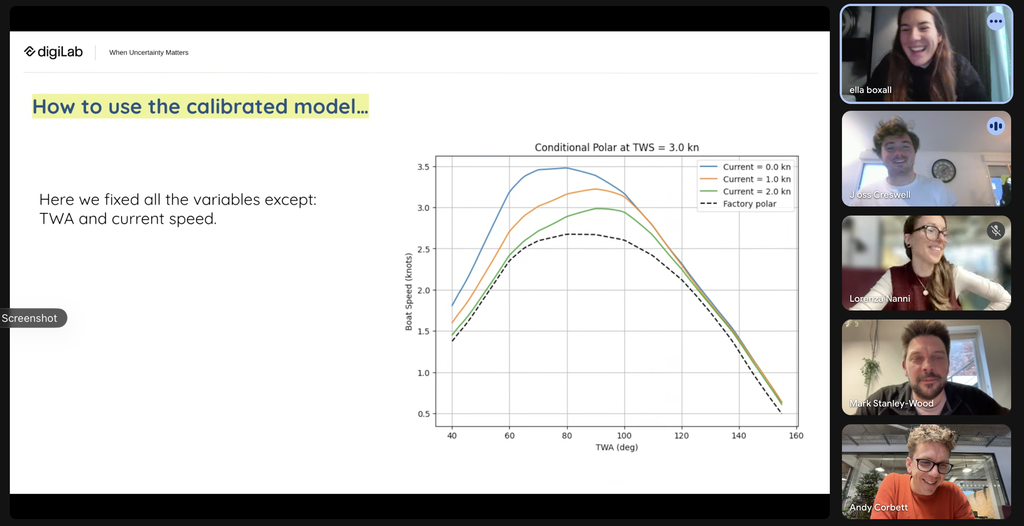
What we're actually building is a personalised polar, one that is trained on my boat, my sailing, and my conditions. The input is my own boat logs coupled with weather and sea conditions at the time of the race. The model learns my Figaro 3 specifically, sailed by me, in the conditions I'm actually going to be facing in the Celtic Sea in March.
Working with theLab is a different experience from anything I've done in sailing prep before. There's a lot of time spent translating, me trying to explain what a beaten-up sea state feels like at the helm and the current ‘folk knowledge’ work arounds that offshore racers use to iron out data inconsistencies and then turning that into something the tech can work with. It goes both ways. I've started thinking about my own sailing in slightly more structured terms because of it, which is probably a useful side effect. The end result, in my head, looks something like a polar that shifts and adapts not a static chart on an instrument screen but something that reflects the race as it's actually unfolding around me.
The Next Step
The immediate milestone is the Solo Guy Cotten, March 8th, Concarneau. The 50th edition, the opening round of the Elite Championship, and my first real test of whether the model holds up when it matters. I'll be running it alongside my own instincts and watching closely for where they agree and where they don't.
Offshore racing at the sharp end comes down to a series of high-stakes calls made on incomplete information and not enough sleep. This technology doesn't make those calls for you, but when you make them you're leaning on something more than gut feel and a polar that was built for a sailor who isn't you. On a startline full of experienced figaristes, that's a meaningful difference.